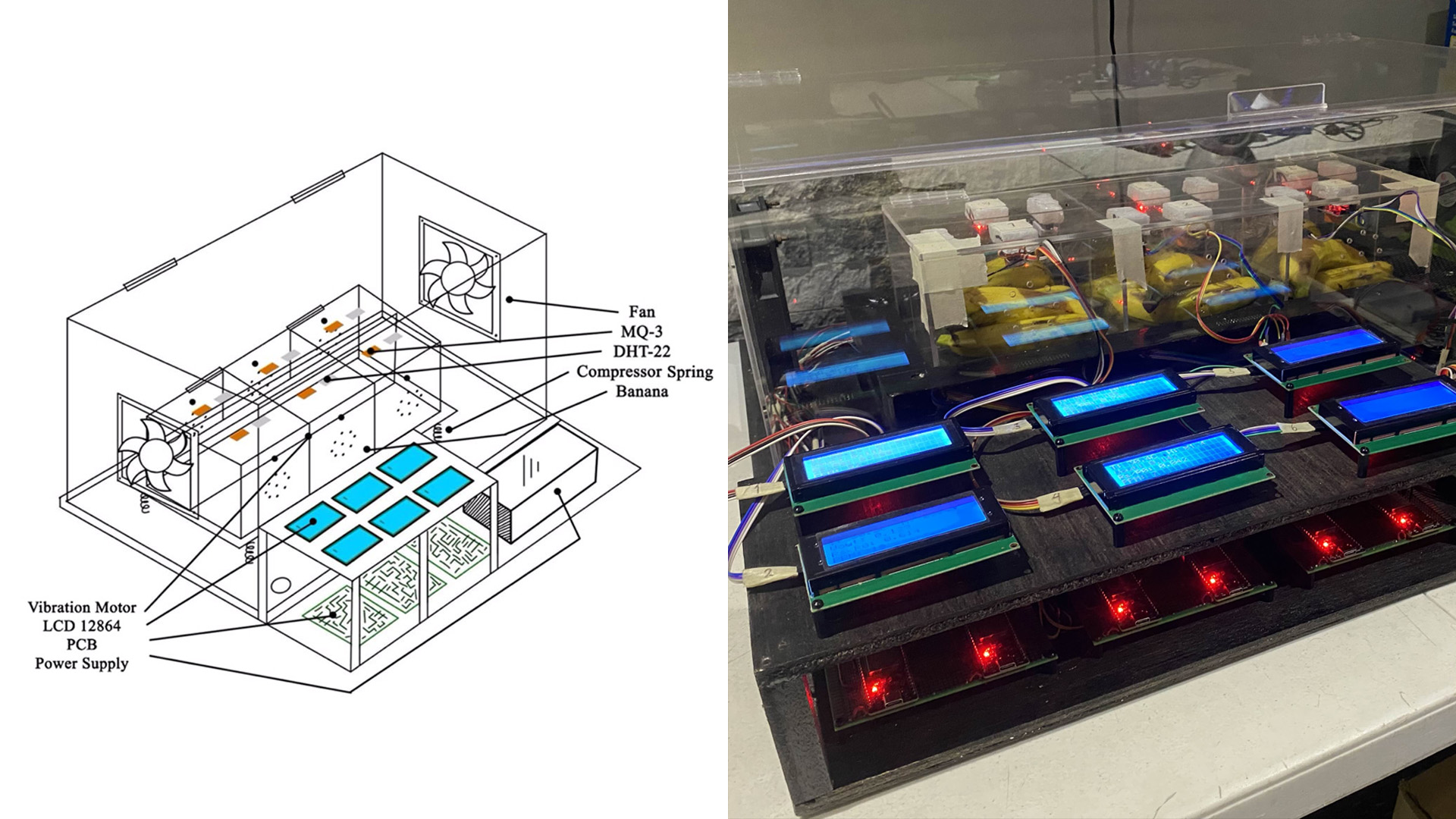
The Philippines is one of the world's largest banana producers, and Lakatan is one of the most beloved varieties in the country. Yet a significant amount of it spoils before it ever reaches the table, not because of bad farming, but because of what happens in between.
Temperature, humidity, and the physical stress of being moved around quietly shorten a banana's remaining life while it sits in a truck or a storage facility. By the time anyone notices, the damage is already done.
That was the problem we wanted to solve. My co-researcher and I built a system that monitors those transport conditions in real time using sensors, and feeds that data into a neural network, a program trained to recognize patterns and make predictions the way a human brain learns from experience. The system figures out how those conditions interact and uses that to estimate how much shelf life a batch of bananas has left, while they are still on the way.
The goal was not simply to detect that something was going wrong. It was to give enough warning that someone could actually do something about it.
I was responsible for both the software and hardware side of the project, from wiring up the sensors to writing the code and gathering the data that made everything run. It was some of the most demanding work I have done, and also some of the most rewarding.
Awards and Recognition
- Best Presenter — 57th EECE Thesis Colloquium
- Presented at the 2025 8th International Conference on Computing Methodologies and Communication (ICCMC)